There are moments in sustainability when progress isn’t about declaring one material a winner and another a loser. It’s about looking at the data, understanding how materials perform in the real world, and being willing to change our conclusions when the evidence changes.
The U.S. Plastics Pact’s decision to remove Expanded Polystyrene (EPS) transport packaging from its Problematic & Unnecessary Materials List is one of those moments.
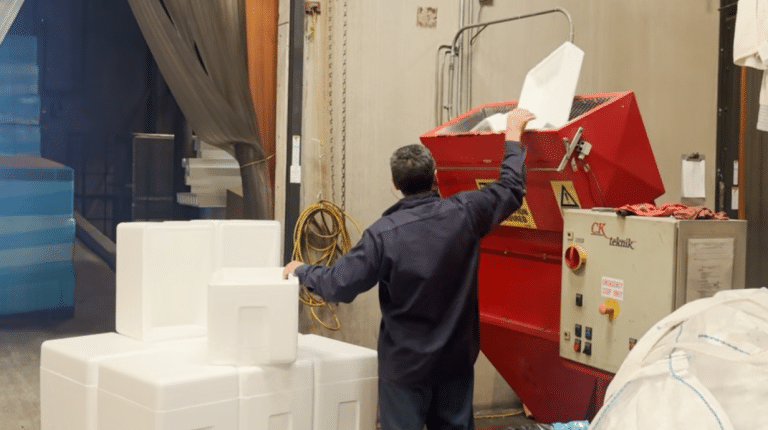
The decision recognizes that EPS transport packaging has achieved a recycling rate of approximately 30% or higher, meeting the threshold established by the USPP’s framework. It also recognizes an important distinction: transport packaging often moves through commercial distribution channels where it can be collected and aggregated differently than consumer EPS.
As someone who leads sustainability efforts for an EPS packaging supplier, I believe this is significant, not because EPS has suddenly become a perfect material, but because it reinforces the importance of evaluating packaging based on data, actual system performance, and the application it serves.
The job of protective packaging matters
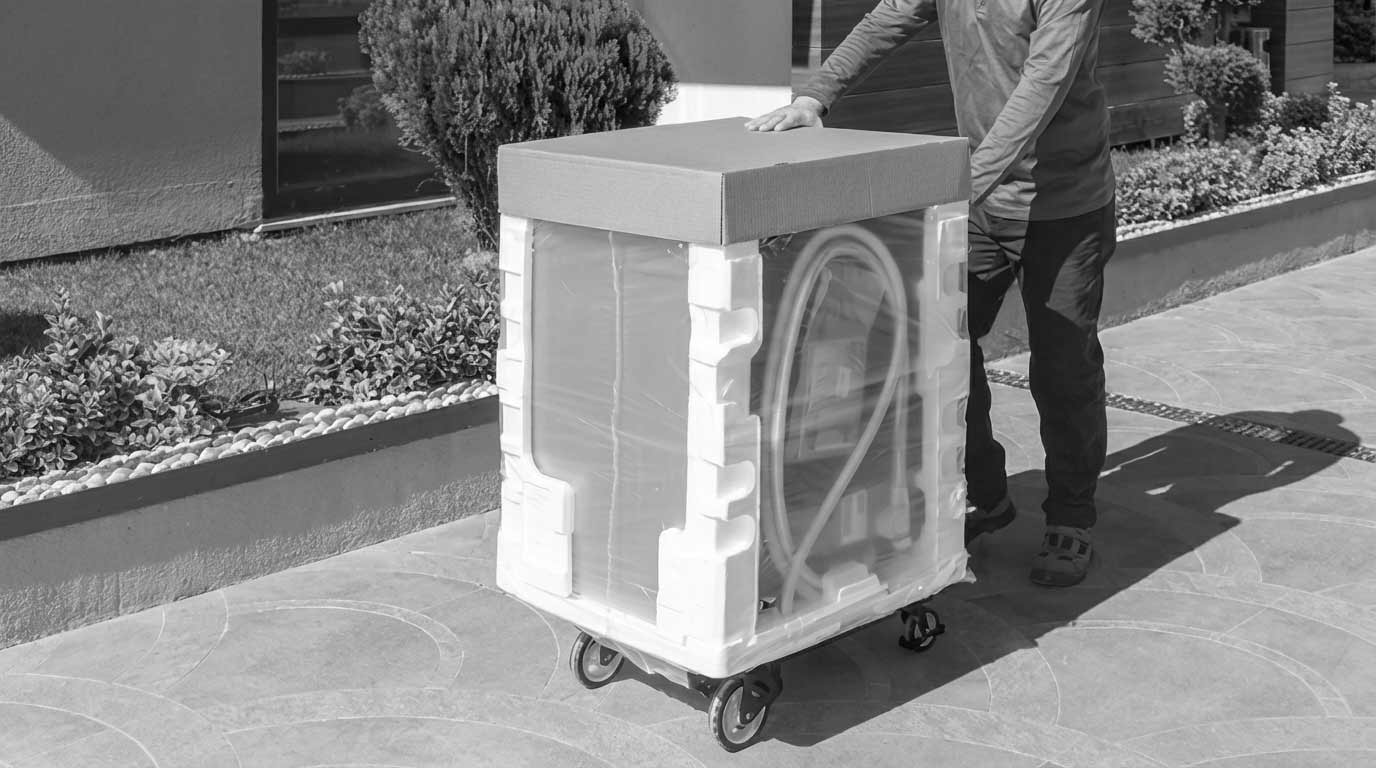
One of the biggest challenges I see in packaging sustainability is evaluating materials in isolation. Protective packaging has many jobs to do. It must absorb impacts, withstand compression and vibration, immobilize products and, in cold-chain applications, provide thermal protection. Ultimately, this means making sure the product gets to its destination intact.
If a packaging change results in a damaged appliance, vaccine shipment, electronic component or industrial product, we’ve potentially created a much larger environmental impact than the packaging itself. We’ve consumed additional raw materials, energy and transportation to manufacture and deliver a replacement. The protection of the product to avoid rework or reshipment costs is, on its own, a sustainability attribute.
Cold chain makes this even more apparent
EPS has long been used to protect temperature-sensitive products because it combines low weight, impact protection and thermal insulation in a relatively simple package.
Consider what that package may be protecting: vaccines, biologic medications, temperature-sensitive pharmaceuticals, GLP-1 medications, diagnostic materials, or perishable foods moving through an increasingly complex distribution network.
In these applications, packaging isn’t simply protecting a product from physical damage. It helps maintain a specified temperature range as that product moves through warehouses, trucks, and aircraft on its way to a healthcare provider, pharmacy, or patient.
A packaging system that fails to maintain temperature can result in product loss. For pharmaceuticals and biologics, that can mean wasting a highly valuable product and triggering a reshipment. For food, it can mean unnecessary food waste in addition to the environmental impacts associated with producing and transporting that food.
That doesn’t mean EPS is automatically the best solution for every cold-chain application. It means thermal performance must be part of the sustainability calculation. Replacing a material with something perceived as more sustainable, only to require significantly more material, additional refrigeration, more complicated packaging or experience greater product loss, may not even improve the environmental outcome. The entire system matters and must be evaluated.
EPS on the list – then and now
EPS has characteristics that are difficult to replicate simultaneously in other materials. It is extremely lightweight, provides excellent energy absorption, can be engineered precisely around a product and offers effective thermal insulation. EPS is approximately 98% air by volume, allowing relatively small amounts of polymer to provide significant protective performance. While this is important, it wasn’t cited as a factor in the USPP change.
These characteristics can contribute to both material and transportation efficiency, and rarely are they disputed from a pure performance standpoint. The biggest arguments against it have historically been based on perceived sustainability concerns, which led to its appearance on the USPP list.
The recyclability of EPS, while always known as possible, was never the challenge. Historically, the economics and logistics to get the EPS recycling to the infrastructure served as a barrier.
That’s why the advancements in collection, densification, aggregation, and reliable end markets are so important. the EPS Industry Alliance (EPS-IA) has been instrumental in helping creating recycling programs for consumers, which currently has over 375 drop-off locations in the United States. The USPP decision is encouraging because it recognizes that these systems have improved and are continuing to improve.
Honesty about alternatives
Asking if a material is “more sustainable than EPS” can lead to subjective responses based on the experiences of the person answering, and rarely are they backed by data. A better question for packagers should be: Which solution provides the required performance with the lowest overall environmental impact?
For some applications, paper or molded fiber may be the right answer. In others, reusable materials or different foam technologies may make more sense. A material that requires significantly more mass to provide equivalent protection isn’t automatically better because it comes from a renewable resource. A package that is technically recyclable but routinely fails in distribution isn’t necessarily sustainable.
And in cold-chain applications, a package with a favorable end-of-life story may still have a poor overall outcome if it requires significantly more material or energy to provide the required thermal performance, or risking product loss due to thermal excursions. Ultimately, this means that sustainability must account for the entire system. In all these examples, an answer would be based on data and be able to be quantifiably measured.
What does this mean for Altor, and for me
At Altor, our responsibility isn’t simply to sell EPS, or any other technology within our portfolio. It’s to help customers make better packaging decisions. That means considering material efficiency, product protection, thermal performance, transportation, recycled content, manufacturing impacts and realistic end-of-life pathways.
It also means continuing to improve the materials and systems we already have. We’re investing in recycling, recycled-content solutions and packaging optimization. Solutions such as EmeraldPak™, which incorporates 60% post-consumer recycled EPS, demonstrate that recovered material can become feedstock for new, high-performance packaging.
We’re also proud that all 17 of our foam manufacturing facilities across the U.S. and Mexico serve as EPS recycling drop-off locations, along with the aforementioned 350+ additional facilities across North America.
For me, the USPP decision reinforces an approach that I believe is critical to the future of sustainability. We need to select materials based on evidence, not assumptions.
A broader lesson
I see three important takeaways from the recent USPP decision.
- Data matters. The USPP removed EPS transport packaging based on measured progress against its established criteria. When the data changes, our conclusions should be allowed to change with it.
- Infrastructure matters. A material’s environmental profile doesn’t exist independently of the system surrounding it. Collection, densification, recycling capacity and viable end markets can fundamentally change what happens after packaging is used.
- Sustainability isn’t a competition between material categories. There is no universally sustainable packaging material. There are better and worse solutions for applications.
Once you’ve met the base criteria for protecting the product, when discussing sustainability, it can mean any number of things. The most sustainable package may use the least material. It may have the lowest impact on the lifecycle. It may be reusable hundreds of times. It may be paper; it may be EPS. In all these instances, it’s important to qualify that level of sustainability with the “why”.
Progress is not a finish line
I’m encouraged by the USPP decision, but I don’t see it as a reason for the EPS industry to declare victory. I see it as an obligation to keep improving: better collection, more recycling capacity, stronger end markets, better data and more recycled content where technically and economically appropriate. EPS has legitimate challenges and we should acknowledge them.
But sustainability discussions also need to acknowledge the legitimate strengths of EPS, and the environmental consequences of selecting an alternative that may require more material, more energy or provide less protection.
The most encouraging part of the USPP decision isn’t that EPS packaging was removed from the list, it’s the reasoning and evidence interpretation that led to the decision. The industry improved collection systems, developed end markets, invested in recycling and produced better data. The evidence demonstrated that EPS transport packaging had crossed the threshold established by the USPP’s own framework.
This is an excellent example as to how sustainability decisions should work, and as sustainability leaders, we should be willing to challenge our assumptions, including those about materials we may not initially favor or supply. The future of sustainable protective packaging shouldn’t be about choosing sides. It should be about choosing the best solution for the application and being able to prove it.
About the Author
Randy Kerr – Design Engineering Lead
Packaging engineering leader with over 20 years of experience across the industrial and CPG fields. Randy leads Altor’s team of veteran packaging design engineers, focused on EPS and structural paper packaging for the industrial and life sciences markets. He holds a Packaging Engineering degree from Michigan State University and brings extensive expertise in distribution and damage prevention, structural packaging design, and building high-performing engineering teams. Randy also serves as Altor’s sustainability lead, guiding the company’s packaging sustainability initiatives.